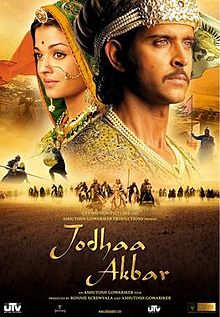
In almost every blog post I have posted this year, I have incorporated many aspects of my Indian culture into the post. I hope that you all (my audience) can perceive how passionate I am about my culture, and its connection to the topic of humanity and bettering society. Because of my passion for this, I decided to dedicate my final research project in this course to a close analysis of the religious historical inaccuracies of the Bollywood film, Jodhaa Akbar. The plot of this film revolves around the union between a Muslim emperor and a Hindu princess during the period of the Mughal Empire. The main goal of this film is to highlight the peaceful coexistence of the two religions of Islam and Hinduism in India that have been in a “so-called” rivalry with each other from the start of the country’s creation. In this final post, I will focus specifically on my first hand experience of identifying as a Muslim in India today, and aspects of the conception of this religion that I hope changes in the future globally.
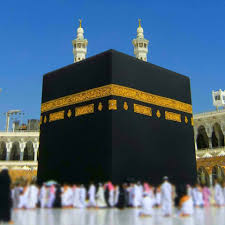
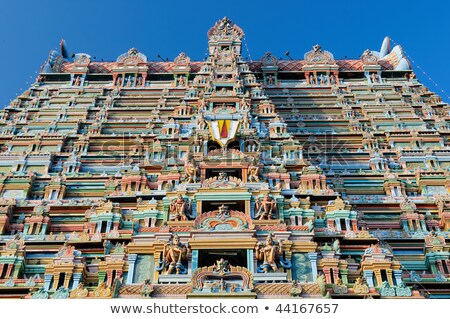
Specifically, the topic of Islam in India means a lot to me, and this is due to my identity of being a “South Indian Muslim”. Often times in America, these words are a paradox and I get confused and blank faces. This is because 87% of the population where I am culturally from (the state of Tamil Nadu) is Hindu, and thus this religion is most endorsed and relevant to the town today. There is only a meager 5% population of Muslims in South India, along with similar percentages of Sikh, Christians, and other religions. Although I have never lived in India, I do make annual vacations to this region since majority of my family, including my grandparents all reside in the town of Tiruchirappalli, Tamil Nadu. In this town, I am almost always speechless with the disproportion of the religious significance of Hinduism versus other religions. There are an abundance amount of Hindu temples there are in comparison with other places of religious worships such as Mosques, Churches, and other religious temples. Although these religions are a minority in this region of India, it seems almost nonexistent with the prevalence and underhanded “superiority” that is given to Hinduism.
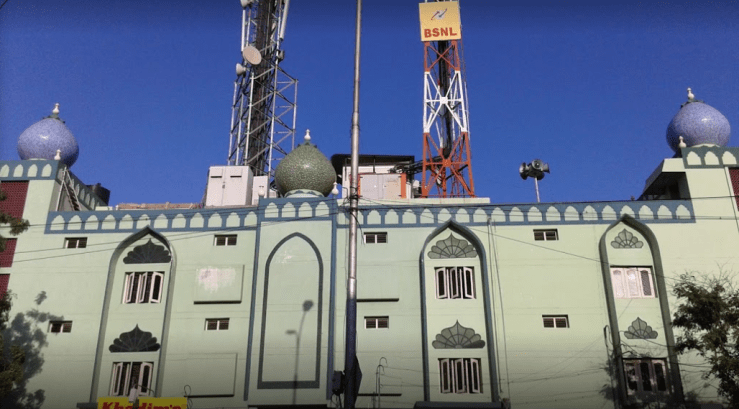
Whenever I visit the town of Tiruchirappalli today, I happen to encounter a situation that makes me understand the difficulty of identifying as a Muslim in an area that is dominated by the “rivaled religion.” Realizing this, I have a profound appreciation for my parents’ background and childhood in this predominately Hindu area. One year, my mom and I had visited India during the time of Ramadan, which is the holy Islamic month that is filled with fasting and religiosity for Muslims. My mom decided that we were going to go the one mosque that is built in the town of Tiruchirappalli in order to break our fast, and gather with the fellow Muslims of this town. Religiously, this is a tradition in which one’s deeds of fasting are more rewarded than if one was to break it alone. Geographically, this mosque is in the heart of the town of Tiruchirappalli and there are numerous Hindu temples that surround it, but this does not detract away from the amount of people that come and worship. However, as we approached our way to the mosque, there were numerous Hindu officials from the temples that were standing directly outside of the mosque and protesting an issue of harassment that occured recently in the temples. There was no context given in the situation, but they were claiming that the Muslims in this town were associated with this affair, and thus were blocking the entrance of the mosque with the numerous protests in the area. When I saw this, I was completely shocked. It is unfortunate that this occurred within their place of worship, but I just saw their actions as being equally destructive and disrespectful for the Muslims that were attempting to worship during their sacred month. My mom and I were both shocked and disappointed that this was happening, and were forced to leave the premises of the religious grounds. There was disrespect that was occurring towards both religions.
Another encounter that left me shocked was at a traditional Hindu wedding that my family and I had attended during one of our vacations in India. When we arrived at this wedding, there was a person hired at the door to greet us, and to immediately place pottu, which is a colored dot worn on the forehead by Hindus in India, on all the individuals in my family. This was done without question or consideration that my family were not Hindus and thus we did not believe in this practice. However, we were forced to conform to the standard of this wedding without question of our religious identification. Although we were partaking in the celebration of the wedding, it was considered offensive and rash to immediately believe that we identify religiously under the same religion.
While listening to Professor Rahimeieh’s lectures, I feel a certain connection with the identity crisis that many Persians face in Iran. Although I am proud to be a Muslim in India and America, there seems to be very few public encounters of the differences that these religions have, there is a constant pressure to conform to the standard of the region and society as a whole. Specifically, Muslims in Tamil Nadu are barely given an opportunity to practice their religion based on the limited areas of worship, and there is minimal consideration for the religion when compared to Hinduism as a whole in the same region.
 Uncovering Culture