I hav finally approached an extremely daunting assignment of this class: the Research Project. I am not completely sure on the specific area of study that I want to concentrate on for this research project, but I definitely want to choose an artifact that is a Bollywood film. since it incorporates two things that are very dear to me: movies and my culture (which I assumed anyone could tell through the theme that this blog embodies). one movie that I choose to watch for this project is Jodhaa Akbar, a historical romance film that features the union between the Islamic Mughal emperor Akbar, and the Hindu Princess Jodha. Although the concentration of this movie is based on a specific ruling under the Mughal empire, there were many scenes that exclaimed the power of feminism in Indian society. This led to me thinking about the feminism that exists in India, and how prevalent this topic is in the Indian culture currently. A very relevant topic in Indian feminist culture is the Me Too Movement. This was very surprising to me, as I had always thought that Indian culture suppressed any type of outspokenness amongst Indian women. However, I am pleasantly surprised on the news and protests that prove that my perception of India is being proven wrong.
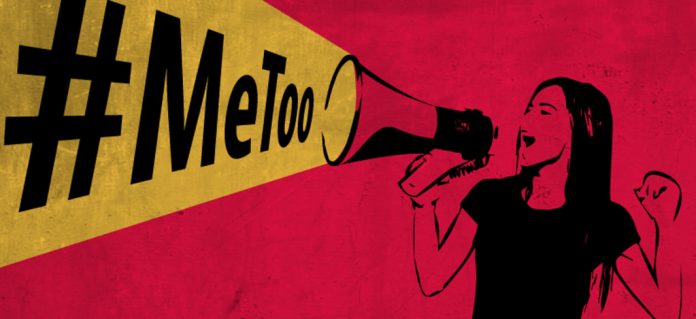
The Me Too Movement was created in 2006 to help unify and heal survivors of sexual violence. Although this movement was created almost two decades ago, it has reached its peak popularity now, and there have been many features of this movement through its trending hashtag throughout the world. The goal of this movement is to draw attention to the widespread occurrence of sexual violence, and bring awareness to the topic of how awfully common it is. Through this awareness, there is a hope that the ideology of sexual violence can be altered, and that the gravity of this topic can be emphasized. This leads to holding perpetrators responsible for their committed actions.
According to a recent CNN article that I found, India is the most dangerous country for women in the world. This is due to the high risk of slave labor and sexual violence in the country. This fact was extremely staggering to me based on the supposed risk that a young women like me could face in the situation of living In India. There are 195 countries in the world today, and the fact that India is leading in terms of something as negative as sexual violence is heartbreaking to me. I am a proud Indian, but knowing this fact is such a hard pill to swallow. Although there has been legislation passed in effort to reduce and punish followers of this malpractice, there are approximately 100 reports of sexual violence in the country a day. This means that theres roughly a total of 36,500 cases annually. This is a staggering amount, and the government has done little to reduce this number by minimal enforcement of the laws that have been put in place.
Personally, I think the treatment of women in a diminutive manner is embedded within the culture of India. From the visits that I have made to India, I have observed that the country’s method of perceiving situations and establishing grounds is done in a patriarchal manner. Everything seems to be focused around the men of the society, and the women are suppressed in almost every possible way. There is recent historical evidence for why this is a true fact, and I found this information in an article from The Conversation. This article states that the economic liberalization that occured in India in 1990 brought many new careers for women based on the widespread cultural shift this movement brought for India. This lead to questions about women’s freedom, choice, and desire in India. Many women were successful in this transformation that occurred, but many women were suppressed based off of the conservative Indian method of thinking that questioned the transformation of women’s traditional roles in society to more modern positions they were taking up. Although the peak observation of the shift in the respect and the responsibilities given to women occurred in 1990, it is still extremely relevant to the society of India today.
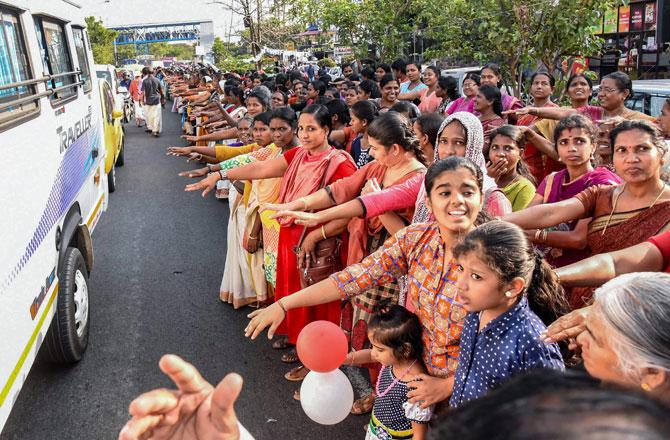
There are many forms of protests that women have put up in India, emulating the Western culture. Although the Me Too Movement is emphasized in India, there are other movement that occur that highlight the inequality that women face in the country that are truly based on their gender. One report that stands out to me is an account of a recent protest that occurred in Kerala. In this state, there were 5 million women that lined up in a 385 mile line on the Southern border in effort to end the violent agitations of women entering the famous Hindu temple of Sabarimala temple. This group of women came from mixed religions, and their driving motive was the equal application of men and women. They claimed that “where a man can enter, a women can also go.”
Hearing news of women trying to enact change in India makes me hopeful, and I really hope that one day the treatment of women in India will be equal to that of men. Women are so powerful, and I hope that they can be appreciated for what they do in non-Western countries, such as India, where their role in society makes the country a wonderful place. They truly are the backbone of society.
 Uncovering Culture