Historical revisionism has been practiced for centuries. It is the method in which one reinterprets the events that have occured in history to correlate with their beliefs. This has been practiced not only by historians, but by people from different ethnic and social groups, economic backgrounds, and political parties. The reason this form of interpretation has been in practice for so long is due to the tendency for humans to deduce events that occur in daily life in a perspective that is most favorable to us. This form of understanding related to the psychological processing in humans, and how the mind plays a role in altering fact into interpretations. The way an event is interpreted by humans can play role in its potential impact on society. One example that is relevant to how business is viewed today occured in the late 1930s in America, in which the robber barrons played an enormous role in modeling the potential success a business can have.
History is a very subjective term, and it is usually the result of the perspective it is viewed in. This can be as broad as international perspectives contrasting with domestic perspectives, but it can also mean domestic perspectives clashing with each other. While some view an event in history as positive, others may interpret the same event as negative. This view can be seen by the controversy caused by the Gilded Age of America in which the Robber Barrons were a prevalent aspect of society, and shaped America into rising as the superpower that it is. The people that held a tremendous amount of power during this time included Henry Ford, J.P. Morgan, Andrew Carnegie, and John D. Rockefeller. Each were responsible (respectively) for the creation of the assembly line that revolutionized the automobile industry, a successful financier for powerful companies, the establishment of the largest steel company in the world, and the founder of the Standard Oil company which was the largest refinery of oil in the world at the time. Due to each of these robber barrons’ tremendous success, many people viewed these men as powerful and extremely influential in their work. The people that have come to their immediate defense include business revisionists historians such as Alfred D. Chandler and Gabriel Kolko who emphasize the positive contributions that the robber barrons had in our society. However, many middle class citizens who were employed by these business tycoons view them as some of the most detrimental people in American history. Not only did they implement harsh conditions for workers, but they gained their wealth through the desire of greed which led them to racially discriminate, commit fraud, and ignore government regulations on limiting their success. Through these two differing interpretations, it can be observed that historical revisionism is a completely subjective term.
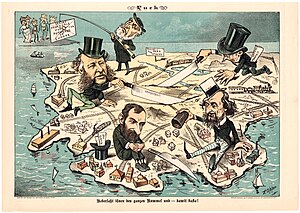
Historical revisionism can also be applied to current events in society. The two-sided perspective on how business was viewed in the 1930s is still relevant to how we interpret several businesses todays in wake of their scandals. A prominent example of this can be seen through the Livestrong campaign launched by a distinguished Nike figure and athlete, Lance Armstrong. Lance Armstrong’s doping scandal brought tremendous negative backlash to his Livestrong foundation, which created havoc amongst the people that he influenced the most as an athlete that seemed to undertake insurmountable tasks. Armstrong’s use of dopamine to enhance his ability as an athlete came as a shock to many people as being a gifted athlete shares a strong correlation with natural abilities to people. However, his use of drugs caught many people off guard, and led to an infamous negative reputation of him today. Many other athletes such as Tiger Woods and Michael Phelps have committed similar actions. However, the message behind Lance Armstrong’s Livestrong company greatly contradicted his action to intake drugs to enhance his performance in his cycling competitions, and thus stained his business which has been discontinued by Nike.

Bibliography:
- “25 Biggest Corporate Scandals Ever.” List25, List25, 29 Oct. 2018, list25.com/25-biggest-corporate-scandals-ever/.
- “America’s Gilded Age: Robber Barons and Captains of Industry.” Maryville Online, online.maryville.edu/business-degrees/americas-gilded-age/.
- Simpson, Connor. “Lance Armstrong Killed the Livestrong Bracelet.” The Atlantic, Atlantic Media Company, 29 Oct. 2013,
 Uncovering Culture