I have been raised in a very traditional Indian household. Although my parents have lived in America for almost thirty years, they still impose Indian standards in the house to ensure that my brother and I stay true to our roots. In addition to the Indian standards implemented in the house, they also expose us to our true Indian heritage by taking us on family trips every couple of years. For me, these trips are extremely exciting and fascinating. Direct exposure to life in India is an experience that I value tremendously, as I feel very connected to the cultural components that make me who I am. However, there are significant negative aspects of India that I observe when I am there. The biggest problem I see is the divide in gender, and the amount of power that each gender carries. There is a definite hierarchy power that men have over the women in India. This divide of power is not only evident in the political positions in India, but also in the common life in India. I can personally relate to this divide in power through my parents’ arranged marriage. The marriage between my mom and dad was the result of the dowry system, in which the female’s side of the family establishes the condition of a marriage by “paying” the groom’s side of the family with durable goods of a certain value. Through this course of exchange, there is a definite hierarchy given to males in India, as their companion in life is measured by a certain value of goods.
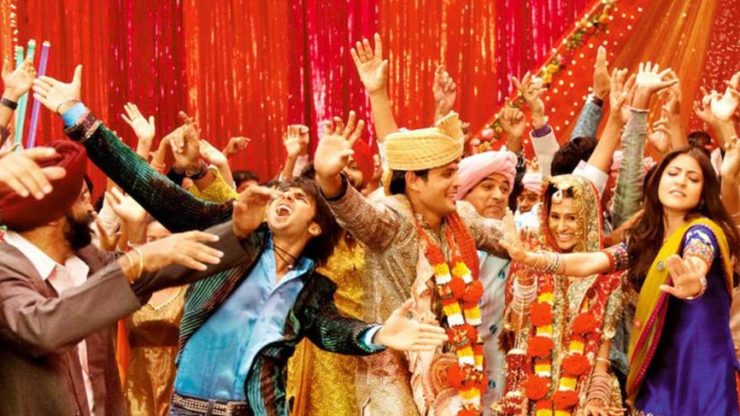
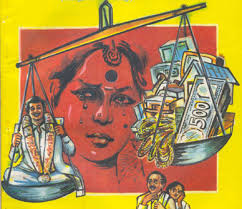
The dowry system in India has been practiced for ages, literally. Its origins have traced all the way back to the Middle Ages. Although the function of the system is evolving today, it is still in practice for the union of many males and females in India. The values of this process are extremely physical, as the emotional bonds held between a husband and wife are literally viewed in comparison to the collective value of goods. The dowry system also insinuated an epidemic known as “dowry deaths.” In this process, many brides were burned for not fulfilling the dowry demands of the males. This process is absolutely awful, and the fact that only a third out of all reported cases are convicted brings a shame to the establishment of hierarchy of genders in India. The dowry deaths in addition to all the negative occurrences of dowry was only tolerated to a certain extent until it finally created uproar in India when there was an enactment of the Anti-Dowry Act by the Indian government in 1961. The introduction of this legislature was too early for its times, as there was little enforcement, which led to a rampant amount of illegal market for dowries.
So what does this have to do with Waiting for the Barbarians?
It’s the concept of gender inequality. There is definitely a similar situation that resonates when the Magistrate visits the area where the Barbarians reside. He immediately becomes fixated upon a Barbarian girl, and obsesses over her but also shows little regard for the sake of her well being. He is seen portraying many contrasting actions as he seems to care for her at times, but also condemns her lifestyle solely due to her association with the inferior “Barbarians”. He is extremely interested in the way she has chosen to live her life, and completely seizes the way she thinks by controlling her actions. Through the magistrate’s actions to the women of this novel, the characteristics of his alpha-male sexuality are emphasized. When he is aware of his influence and power, his sexuality is at its zenith and is very prominent. However, his sexuality wanes in any situation he is not in complete control of. There is very little regard for the sexuality of the barbarian girl, and any emphasis on her feelings. Through this, it can be seen that the actions of the magistrate are seen as more significant in comparison to the female “companion” he has pursued in this novel.

Works Cited:
- “The Dowry System | Chances.” RESET.to, en.reset.org/knowledge/dowry-system.
- Aytemiz, Pelin. “Victims of the Empire: An Analysis on Coetzee’s Waiting for the Barbarians.” Academia.edu – Share Research, http://www.academia.edu/899043/Victims_of_the_Empire_An_Analysis_on_Coetzee_s_Waiting_for_the_Barbarians.
 Uncovering Culture