All my life, I have been raised in a very traditional Indian household. Watching Indian movies was part of a family tradition, and I have been exposed to varieties of Indian movies. The stereotype of Indian movies is that they are essentially musicals, contain overly dramatic scenes, and extend for a notoriously long amount of time. None of these are wrong. The plot of all Bollywood movies can be seen as very similar to one another- there’s usually one guy that falls deeply in love from the moment he sees the girl of his dreams, and he will do anything to have her. Whether that means fighting an idea, person, or even an entire nation-he’s going to get the girl somehow. Thus, this proves that there is a simple theme that is elaborately extended throughout the actions of the entire cast.
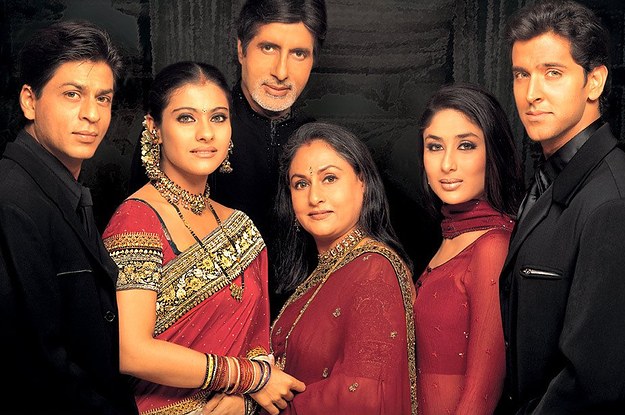
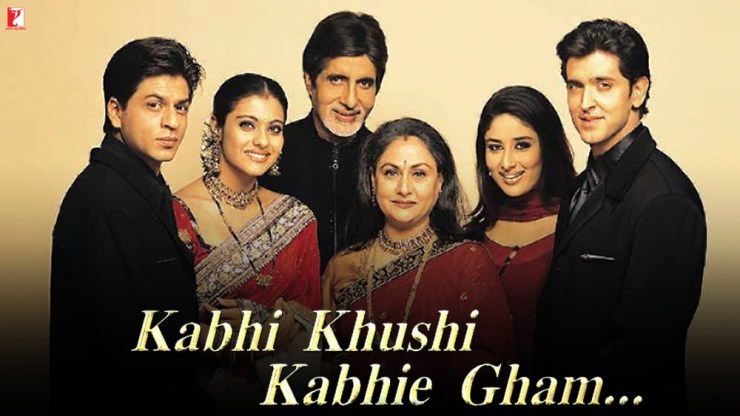
One Indian movie that has a striking amount of relevance to our Humanities Core material is Kabhi Khushi Kabhie Gham. The title of this movie translates directly into “sometimes happy, sometimes sad”, and this already plays a large role in the outcome of the plot. This is seen as the classic Indian movie to most, and that’s because it embodies all the components that make up a traditional Indian movie. With the correct proportions of romance, destiny, questioning customs, and validating oneself, Kabhi Khushi Kabhie Gham has it all. The storyline of this movie starts off with the focus of one family that consists of: the business mogul, Yash Raichand, his traditional loyal housewife, Nandini, their one adopted son, Rahul, and one biological son, Rohan. The actions of this family are very traditional, including the role of all the patriarch figures to be very dominant and important. Anything that violates this sense of order will definitely not be tolerated in this type of household with its rigid structure. The importance of values are first questioned when Rahul elopes with the love his life, Anjali, who belongs to a low economic status. This causes Yash to break the familial bonds between his eldest son, Rahul and stop all communication with him for a decade. There is a constant concern for Rohan to get married, as he is the only hope left to continue the Raichand name. Rohan eventually finds the love of his life, Pooja, who is validated by his parents because of her high economic status. There is a lot of extra moving, dancing, and fighting scenes that occur between the beginning and the end of this three and a half hour long movie, but the most vital thing about this movie is that there is a happy ending that is controlled by fate. Though all the odds were pointing in the direction of Rahul never communicating with his parents again (mainly his controlling father), he finds them eager to lovingly validate Anjali and himself back into the affairs of the Raichand family.
So how does all of this connect with Fagles’ translated version of The Aeneid?
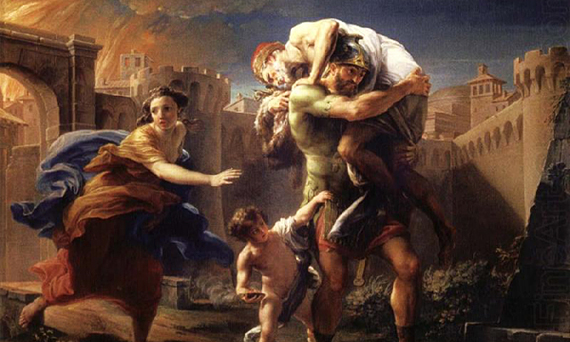
No, there is not any elaborate dancing or Indian drama that occurs in The Aeneid. But, the one similarity between The Aeneid and Kabhi Khushi Kabhie Gham is the common idea of fate that controls all actions. Although Aeneas does follow the order of the Gods, there is a superior order that controls the life of Aeneas. Aeneas finds himself in many situations in which he is deterred away from establishing Rome, but there is always some sort of direction that places him back on his initial path to be the sole founder of this city. There are many instances in which Aeneas and his men engage in war and endure many casualties, but fate allows them to continue in their endeavors. A clear example of this is seen through Aeneas’ encounter with his father, Anchises, in the underworld that is occupied with varying statuses of deceased individuals. Although Aeneas is alive, he is able to accomplish all the steps of transcending the norm and being able to communicate directly with his father. During his interaction with his father, it seems as if fate is engaging in conversation with Aeneas as he is reminded of his duty to establish Rome and the great accolades that will come out of this successful establishment. In addition to fate playing a large role in Aeneas’ life, it plays a similar role in the actions of Dido. Although her love and desire for Aeneas’ were so intense, Dido is not able to obtain Aeneas due to her destiny and she finds herself making the decision to commit suicide due to the urge of her desires.
Yes, there is a notable difference between the Bollywood film industry and the Roman empire, but there is a greater amount of similarity between the two. I can definitely see The Aeneid as the next classical Indian movie.

 Uncovering Culture